
Introduction
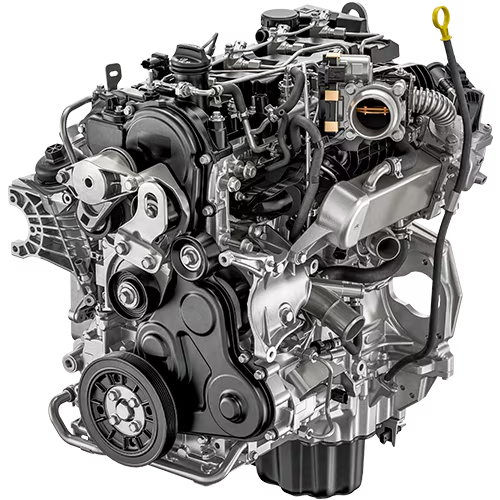
Land Rover is a globally recognized automotive brand known for producing luxury SUVs with exceptional off-road capability. At the heart of every Land Rover vehicle lies a powerful and reliable engine designed to perform in the toughest environments while maintaining comfort and efficiency on modern roads. Over the years, Land Rover engines have evolved significantly, incorporating advanced engineering, cutting-edge technology, and sustainability-focused innovations. This article explores the history, types, performance, and future of Land Rover engines in detail.
History of Land Rover Engine Development
Land Rover was founded in 1948, and its early vehicles were equipped with simple yet robust petrol engines. These engines were designed primarily for agricultural and military use, prioritizing durability over speed or comfort. As demand grew and the brand expanded globally, Land Rover began refining its engines to offer better performance, fuel efficiency, and reliability.
During the 1980s and 1990s, Land Rover introduced more advanced diesel engines, which quickly became popular due to their torque and fuel economy. Later, partnerships with manufacturers like BMW and Ford helped Land Rover integrate modern engine technologies. Today, under Jaguar Land Rover (JLR), the brand produces its own Ingenium engine family, marking a significant milestone in engine independence and innovation.
Types of Engines Used in Land Rover Vehicles
Land Rover offers a wide range of engine options to meet diverse customer needs. These engines are carefully engineered to balance power, efficiency, and environmental responsibility.
Petrol Engines
Petrol engines in Land Rover vehicles are known for their smooth acceleration and refined performance. These engines are commonly found in luxury-focused models such as the Range Rover and Range Rover Sport. Modern petrol engines feature turbocharging and direct fuel injection, allowing them to deliver strong performance while reducing fuel consumption and emissions.
Diesel Engines
Diesel engines have long been a cornerstone of Land Rover’s lineup. They are especially valued for their high torque output, which is essential for towing and off-road driving. Land Rover diesel engines are designed to handle heavy loads and rough terrains while offering impressive fuel efficiency. Advanced emission control systems have made modern diesel engines cleaner and more environmentally friendly than ever before.
Hybrid and Plug-in Hybrid Engines
To meet global emission standards and customer demand for eco-friendly vehicles, Land Rover has introduced hybrid and plug-in hybrid engines. These systems combine traditional combustion engines with electric motors, reducing fuel consumption and carbon emissions. Plug-in hybrid models allow short-distance driving on electric power alone, making them ideal for urban use.
Mild Hybrid (MHEV) Technology
Many Land Rover models now use Mild Hybrid Electric Vehicle (MHEV) technology. This system captures energy during braking and stores it in a small battery, which assists the engine during acceleration. MHEV improves fuel efficiency, reduces emissions, and enhances overall driving smoothness without requiring external charging.
Ingenium Engines: Land Rover’s Engineering Breakthrough
The Ingenium engine family represents Land Rover’s commitment to innovation and performance. These engines are designed and manufactured in-house by Jaguar Land Rover and are used across multiple models.
Ingenium engines feature lightweight aluminum construction, reducing overall vehicle weight and improving fuel economy. They are modular in design, meaning petrol and diesel variants share common components. This approach improves reliability, simplifies maintenance, and allows for continuous technological upgrades.
Key benefits of Ingenium engines include:
- Improved fuel efficiency
- Reduced emissions
- Enhanced durability
- Smooth and quiet operation
Performance and Off-Road Capability
Land Rover engines are built to deliver exceptional performance both on-road and off-road. High torque output ensures strong pulling power, making Land Rover vehicles suitable for towing trailers, boats, and heavy equipment.
When driving off-road, engines work in harmony with advanced systems like Terrain Response, All-Terrain Progress Control, and intelligent all-wheel drive. These systems adjust engine output, throttle response, and traction based on surface conditions such as mud, sand, snow, or rocks. As a result, Land Rover engines provide confidence and control in extreme environments.
Fuel Efficiency and Emission Control
Modern Land Rover engines are designed with strict environmental regulations in mind. Advanced technologies such as turbocharging, start-stop systems, and intelligent thermal management help reduce fuel consumption.
Emission control systems, including diesel particulate filters and selective catalytic reduction, minimize harmful exhaust gases. Hybrid and electric-assisted engines further support Land Rover’s goal of achieving a more sustainable future without compromising performance.
Reliability and Durability
Durability has always been a defining feature of Land Rover engines. These engines are tested extensively under extreme temperatures, rough terrains, and heavy workloads. From deserts to icy mountains, Land Rover engines are engineered to withstand harsh conditions while maintaining consistent performance.
Regular maintenance and proper servicing further enhance engine lifespan. With advancements in diagnostics and onboard monitoring systems, modern Land Rover engines can detect issues early, helping owners avoid major repairs.
Maintenance and Service Considerations
Proper maintenance is essential to keep a Land Rover engine performing at its best. Regular oil changes, timely filter replacements, and software updates are crucial. Using genuine parts and recommended lubricants ensures optimal performance and longevity.
Land Rover also offers advanced service intervals based on driving conditions. Intelligent sensors monitor engine health and notify drivers when maintenance is required, making ownership more convenient and cost-effective.
Future of Land Rover Engines
The future of Land Rover engines is closely tied to electrification and sustainability. The company has announced plans to expand its electric and hybrid lineup, aiming to reduce carbon emissions significantly. Fully electric Land Rover models are expected to play a major role in the coming years.
Despite this shift, Land Rover continues to refine combustion engines to meet global standards. The focus remains on delivering powerful, efficient, and environmentally responsible engines that align with the brand’s adventurous identity.
Conclusion
Land Rover engines represent a perfect blend of power, innovation, and reliability. From early petrol engines to advanced hybrid systems, the brand has consistently evolved to meet changing demands. Whether navigating city streets or conquering rugged landscapes, Land Rover engines deliver confidence, performance, and durability.
Check out the new and latest article to see by clicking here.